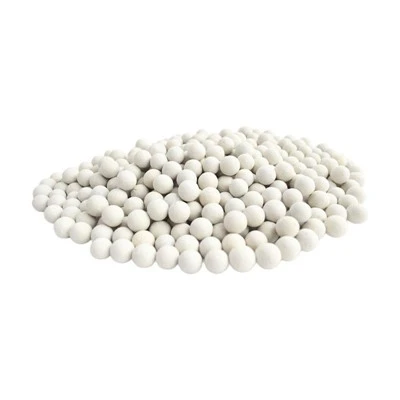
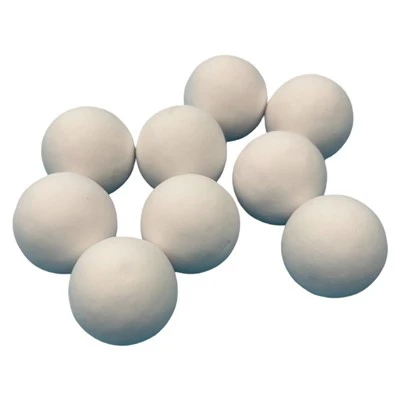
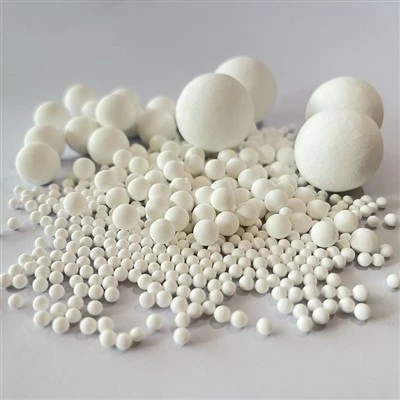
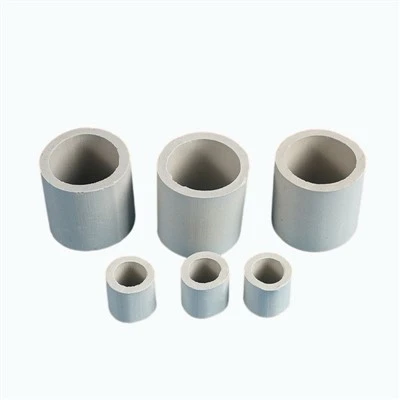
Ceramic balls are widely used in the petroleum, chemical, fertilizer, natural gas, and environmental protection industries as catalyst covering and support materials in reactors and as tower packing media.
Inert alumina ceramic balls, due to their chemical stability, thermal stability, and high mechanical strength, are used in multiple industrial fields. In the petrochemical industry, inert alumina ceramic balls are used in oil refining, catalytic cracking (FCC), and hydrorefining units as catalyst support beds, preventing catalyst particle loss, optimizing fluid distribution within the reactor, and protecting precious metal catalysts. In the chemical industry, such as in the production of synthetic ammonia, methanol, and ethylene, they can be used as packing material in fixed-bed reactors to improve heat and mass transfer efficiency. In environmental protection and waste gas treatment fields, such as in flue gas desulfurization (FGD) and VOCs (volatile organic compounds) catalytic combustion projects, they can serve as catalyst carriers, extending catalyst lifespan. In the pharmaceutical and food industries, due to their non-polluting and non-leaching properties, they are ideal packing materials for pharmaceutical intermediate synthesis and food-grade solvent refining. Inert ceramic balls are also widely used in the petroleum, chemical, fertilizer, natural gas, and environmental protection industries. High-alumina ceramic balls possess high hardness, wear resistance, and corrosion resistance, and are widely used as abrasive media and fillers in chemical, metallurgical, and building materials industries. Inert ceramic balls are mainly used in petrochemical, chemical reactors, and catalyst carriers.
Grinding ceramic balls, as grinding media, are widely used in the grinding of raw materials in industries such as white cement, mineral processing, ceramics, electronic materials, magnetic materials, and coatings and paints. Grinding ceramic balls are used for material crushing due to their high hardness.