Ceramic Rings
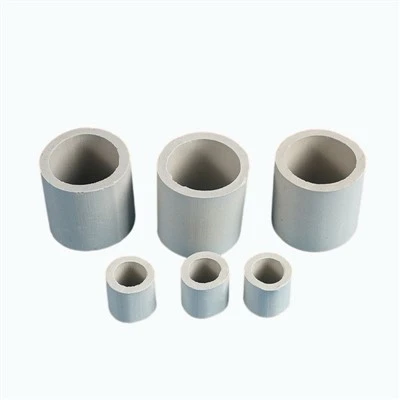
Ceramic rings are rings made of ceramic materials such as alumina, and are a type of ceramic product. Typically, ceramic rings are composed of alumina (Al₂O₃), although some manufacturers add other ceramic materials. Ceramic rings have a relatively dense structure and, due to their high hardness and corrosion resistance, are generally used in chemical reactors.
In chemical reactors, ceramic rings can withstand extremely high temperatures and possess advantages such as wear resistance, corrosion resistance, and pressure resistance. Furthermore, ceramic rings have a relatively stable structure, a long service life, and a relatively low price, making them widely used in chemical, metallurgical, and energy industries.
Ceramic-Glass Rings
Ceramic-glass rings are rings made by mixing ceramic and glass materials. Typically, ceramic-glass rings include ceramic materials such as alumina, silicon dioxide, and zirconium oxide, as well as glass materials such as boric acid and silicate. Compared to ceramic rings, ceramic-glass rings are more flexible.
Ceramic-glass rings are characterized by a relatively open structure, a large surface area, and excellent acid and alkali resistance. In addition, the temperature resistance and mechanical properties of ceramic-glass rings are superior to traditional silica gel rings; therefore, ceramic-glass rings are increasingly widely used in chemical reactors.
Conclusion
The above introduction to ceramic rings and ceramic-glass rings shows that ceramic rings are made of ceramic materials such as alumina, possessing high hardness and corrosion resistance, and are relatively inexpensive. Ceramic-glass rings, on the other hand, are rings made from a mixture of ceramic and glass materials, exhibiting greater flexibility and increasingly widespread application in chemical reactors.