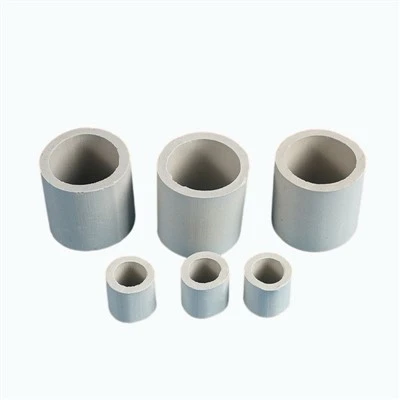
Ceramic rings play a crucial role in water treatment.
First, ceramic rings possess a large surface area. Their surface is covered with tiny pores, providing numerous attachment sites for beneficial microorganisms. During water treatment, organic matter and other pollutants in the water are decomposed and utilized by microorganisms, and ceramic rings provide an ideal environment for microbial growth and reproduction, allowing a large number of microorganisms to accumulate on their surface and form a stable biofilm.
Second, ceramic rings have excellent air and water permeability. They allow water and oxygen to pass freely, providing sufficient oxygen for the metabolic activities of microorganisms and promoting the oxidative decomposition of pollutants. Simultaneously, water can flow smoothly through the ceramic rings, allowing microorganisms to fully contact the pollutants in the water, improving treatment efficiency.
Furthermore, ceramic rings exhibit strong chemical stability. They do not react with chemicals in the water, are not corroded or dissolved, and can maintain good performance for a long time. They can be used in water treatment systems for extended periods without replacement, reducing operating costs.
In summary, ceramic rings play a crucial role in water treatment by providing attachment sites for microorganisms, ensuring oxygen supply and good permeability, as well as their own chemical stability. They effectively remove pollutants such as organic matter and ammonia nitrogen from water, improve water quality, and are an important component of water treatment systems.