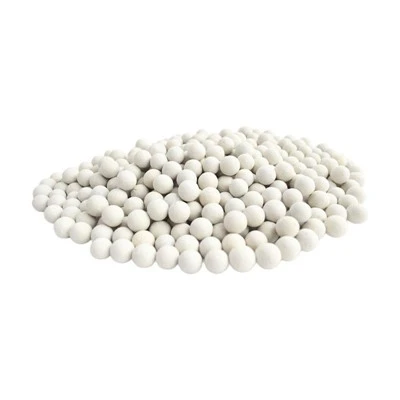
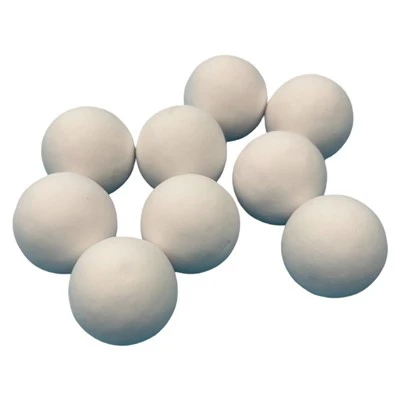
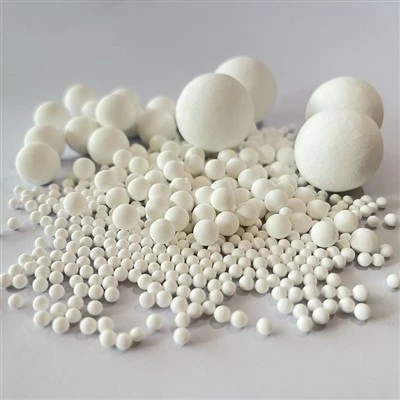
Ceramic ball bearings can be classified by material into zirconia, silicon nitride, silicon carbide, and alumina (Al2O3) all-ceramic bearings, as well as hybrid ceramic ball bearings. Silicon carbide all-ceramic bearings possess high hardness, wear resistance, oxidation resistance, and corrosion resistance, making them suitable for harsher high-temperature and corrosive environments. Alumina (Al2O3) all-ceramic bearings are suitable for even higher ambient temperatures; full-ball alumina all-ceramic bearings can operate at temperatures up to 1200℃.
Based on structure, they can be divided into caged ceramic bearings and cageless full-compact all-ceramic bearings. Full-compact all-ceramic bearings employ a cageless design, allowing for the inclusion of more ceramic balls to increase load capacity, but are not suitable for high speeds. During installation, it is important to note that one side has a ball-filling notch; the notched side should be installed on the end not bearing axial load.
Based on material integrity, hybrid ceramic bearings are the most widely used type. They typically refer to bearings where the rolling elements are ceramic (common materials include zirconium oxide, silicon nitride, or silicon carbide), while the inner and outer rings are metal (such as bearing steel GCr15 or stainless steel AISI 440C, 304, 316, etc.). Their ceramic balls, especially silicon nitride balls, possess characteristics such as low density, high hardness, low coefficient of friction, wear resistance, self-lubrication, and good rigidity, making them particularly suitable for high-speed, high-precision, and long-life applications.